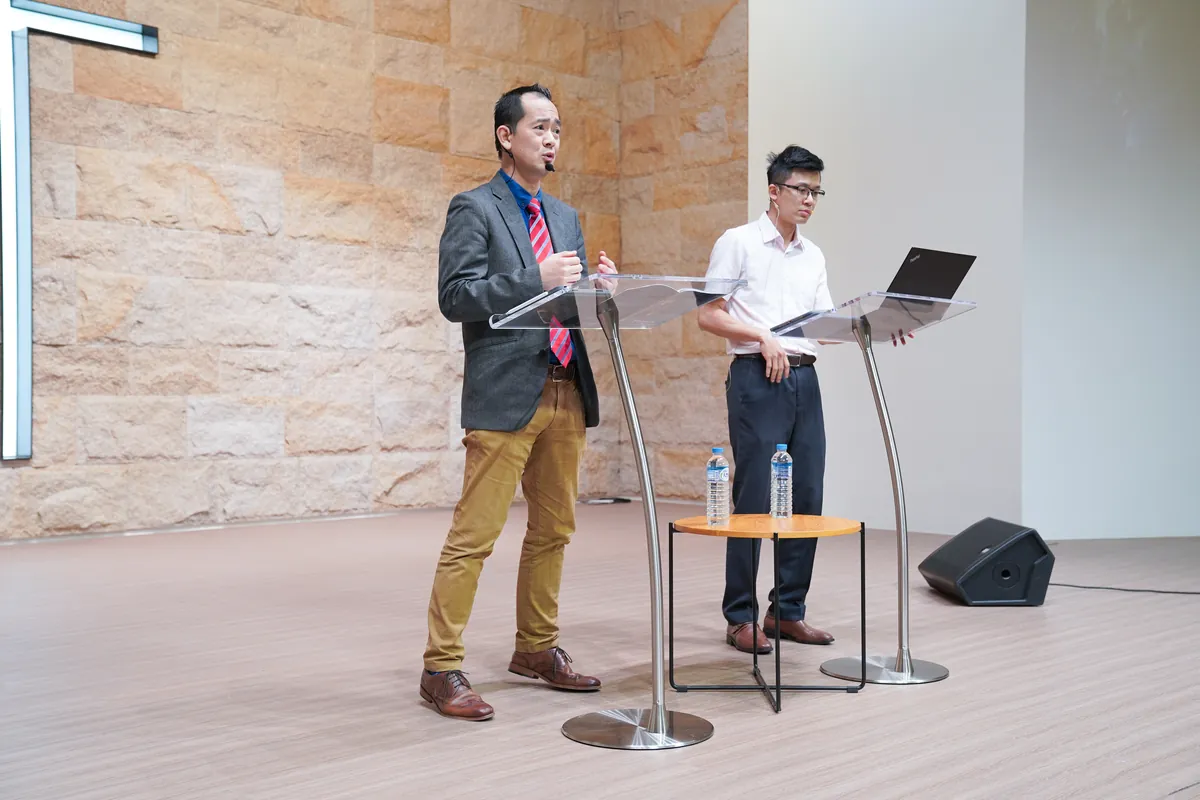
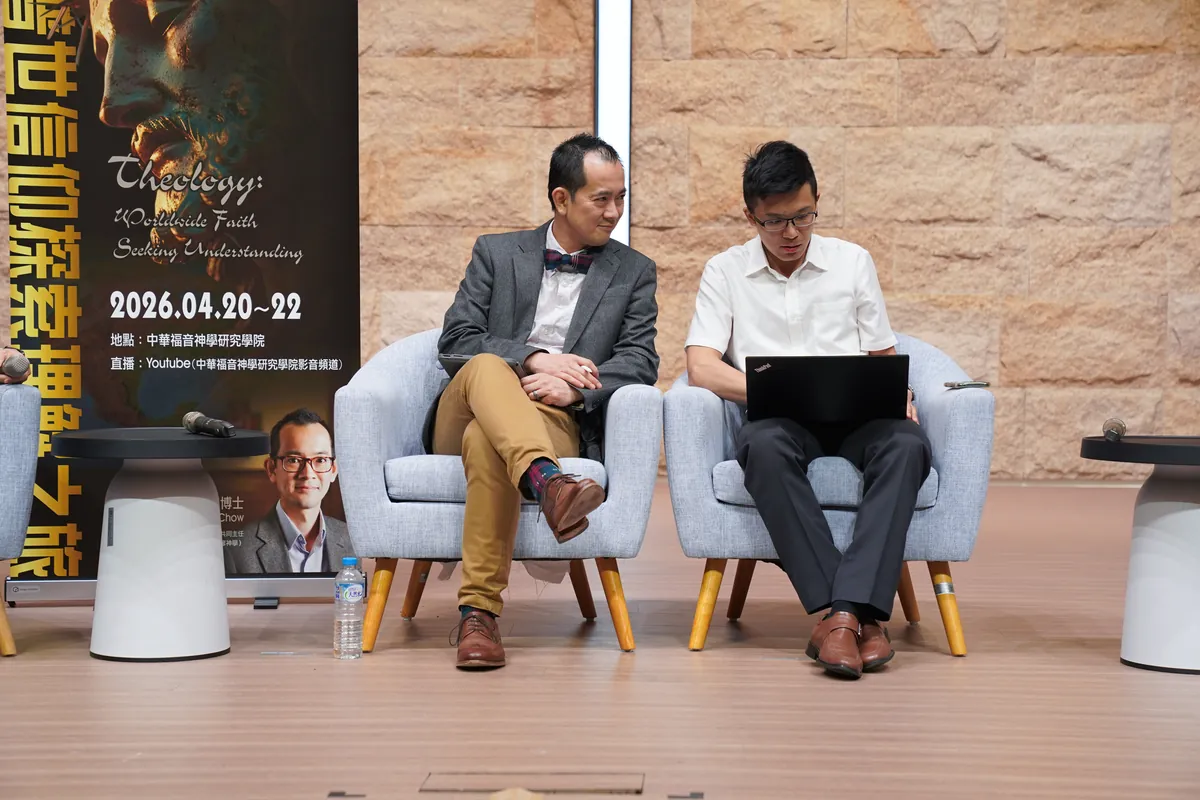
From April 20 to 22, 2026, at the invitation of China Evangelical Seminary (CES) in Taiwan, I interpreted for Dr. Alexander Chow at the three-day Dr. Timothy Lin Memorial Lecture. I interpreted his lectures consecutively from English into Mandarin, and interpreted the response and Q&A sessions simultaneously from Mandarin into English.
The theme was “Theology: Worldwide Faith Seeking Understanding.” Drawing on theologians from outside the West, Dr. Chow took a fresh look at the doctrines of God, the Trinity, Christ, humanity, creation, the Holy Spirit, and the last things, which covers most of systematic theology.
This is my first year as a degree student at CES. To take part in an interpreting assignment of this weight was God’s remarkable leading, and a great act of trust on the seminary’s part. I stayed on campus for the three days, and I am grateful to my wife, who looked after our two children at home so that I could see the assignment through.
1. I learned more than I interpreted
Dr. Chow cited many non-Western and non-traditional theological perspectives, and most of these theologians were new to me. Thankfully, he sent his material ahead of time, so I could study it and translate the key passages in advance. On stage, I worked from the script with one eye while reacting in real time.
Even so, finding the matching quotation or Scripture passage in a few seconds is not easy, and several times I only just made it. Thank God, in the end I found most of them.
2. Deep conversations with scholars
In the evenings I could sit with the CES faculty and Dr. Chow, asking questions and hearing their answers. That was one of the most precious gifts of the whole assignment. Those conversations showed me how vast theology is, and how much I still have to learn about church history. Dr. Chow is a very humble and gracious scholar, and generous with what he knows.
3. Confirming a calling and a gift
Before and after the lectures, many faculty members came over to affirm and encourage me. In those moments I grew more certain that God is using my gift for translation. I found that I can interpret more than the usual seminars for pastors. I can carry theological subjects too, which I had not expected.
Of course, there were still places where my interpreting was not good enough, or where I left something out. There were also moments when my brain was about to freeze and I could not keep up with the speaker. The Q&A sessions were the hardest: every question tested whether I had really followed his argument across the whole session.
At the closing, President Taylor presented the speaker and me with a gift from CES that I had not expected: a CES mug, and a framed photo of the two of us taken on the first day.
A further thought
Two-thirds of the world’s Christians live outside the West. Are we willing to listen more to these theologians? Getting to know one another and talking together can lead us to think more deeply about what we ourselves truly believe.
Why interpreting theology is not yet a job for AI
I would sum up what this assignment required in five things:
- A knowledge of theology, with some depth behind it
- The ability to think on your feet
- A precise command of both Chinese and English, and of moving between them
- The skills of public speaking and spoken communication
- An understanding of the speaker’s emotions, expressions, and subtleties
My hope is to pass on God’s word by speaking it, so that more brothers and sisters can come to know theology and God’s word more deeply through another voice. May the Lord keep leading on the road ahead as I translate for God.
The full recordings are on the seminary’s official channel and are collected under interpreting videos. To learn about the interpreting service, see Interpreting.
Adapted from a Translate4God Studio Facebook post of April 25, 2026, and translated from the Chinese.